In medically assisted alcohol detoxification, the patient stops alcohol intake abruptly, its effects are replaced by a benzodiazepine that has cross-tolerance in a safe and structured manner. This can be reduced at a rate that prevents withdrawal symptoms, but without promoting over-sedation, and ultimately stopped altogether. The process involves providing a large enough initial dose to prevent severe withdrawal symptoms including seizures, delirium tremens (DT’s), severe anxiety or autonomic instability, but to withdraw the medication before physical dependence on its effects begins.
Evidence suggests that long-acting benzodiazepines (such as chlordiazepoxide) may be more effective than short-acting ones in preventing seizures and delirium and allow a smoother withdrawal with less rebound. However, there is risk of accumulation in those with impaired hepatic function and those with significant liver failure in whom short acting benzodiazepines that are not as reliant on hepatic metabolism should be considered.
Initial treatment/deciding when to give first dose
Initiation of treatment before significant withdrawal symptoms begin to emerge, results in better outcomes. Delay in initiating treatment can result in withdrawal symptoms either becoming difficult to control or the emergence of complications such as DT’s or seizures.
Caution should be taken around the use of benzodiazepine sedation while the patient is still intoxicated with alcohol as this can lead to respiratory depression with its complications and death itself. It is rarely useful to check alcohol levels as tolerance to the effects of alcohol can be variable and observations of respiratory rate, heart rate and oxygen saturation can provide more useful aid to decision making.
Therefore, clinical judgement needs to be used alongside the guidelines below:
- Consider GMAWS score.
- 2 or over – Likely to be in clinically significant withdrawals and for treatment to be needed.
- 0 or 1 – Consider supportive care and observation, with treatment to commence if symptoms worsen (GMAWS 2 or over)
- Monitoring this patient group by nursing staff at hourly intervals can prevent exposure to benzodiazepine detox unnecessarily.
- The more severe the alcohol dependence, the earlier withdrawal symptoms emerge after the last alcohol intake.
- Consider the possibility that patients may have consumed significant amounts of alcohol just prior to entering hospital and that their blood alcohol level might still increase if not all has yet been absorbed. Consideration should be given to ensuring assessment takes place after allowing for absorption of the last drink. After approximately 1 hour.
- Some people who are severely alcohol dependent can experience significant withdrawal with a blood alcohol concentration of 100mg/100mL (BrAC 0.5mg/L) or more.
- Medication may be required in these cases but use caution with dosages and always consult with senior doctors.
- Anyone significantly withdrawing with a blood alcohol concentration of 100mg/100mL (BrAC 0.5mg/L) or over should be closely monitored as this is a risk factor for development of Delirium Tremens (DT’s).
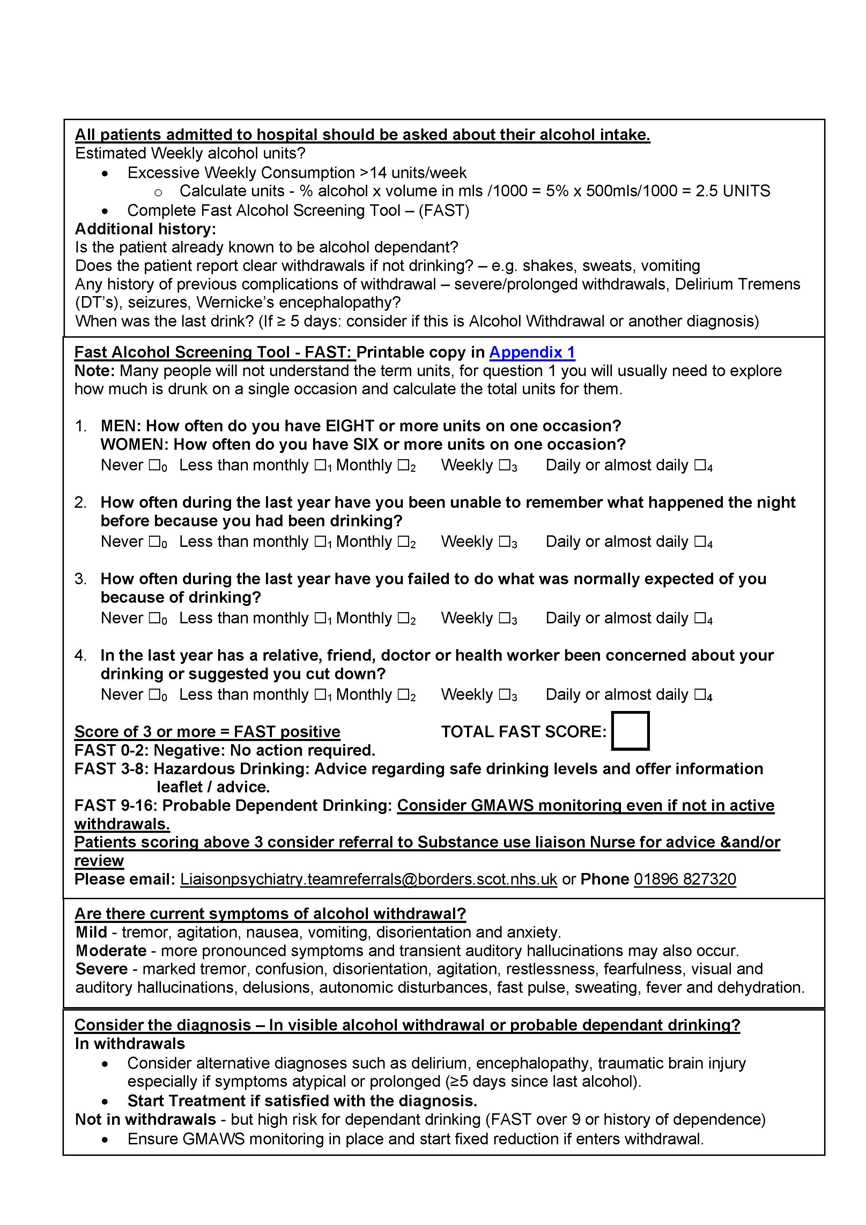
For patients who are clinically in active alcohol withdrawals treatment should not be delayed until the next drug round. Initial doses of medication should be given according to GMAWS score and monitoring with GMAWS started.
Fixed reduction regimen
A fixed-dose regimen is preferred in NHS Borders as it is recognised that a fully symptom-triggered regimen may put patients at risk of being under-treated if the regimen is not followed closely. Full symptom triggered regimens require more regular observations and are only fully safe in environments that have facilities and staffing allowing for close monitoring.
Patients in alcohol withdrawal should be placed on a fixed reducing regimen of chlordiazepoxide. Assessment should be undertaken to consider if the patient is at higher or lower risk of developing significant complications of withdrawals. If admitted overnight use the when required dosing based on GMAWS scoring of symptoms in Appendix 2 until they can start fixed dosing the next morning otherwise the patient will miss treatment doses.
Higher Risk
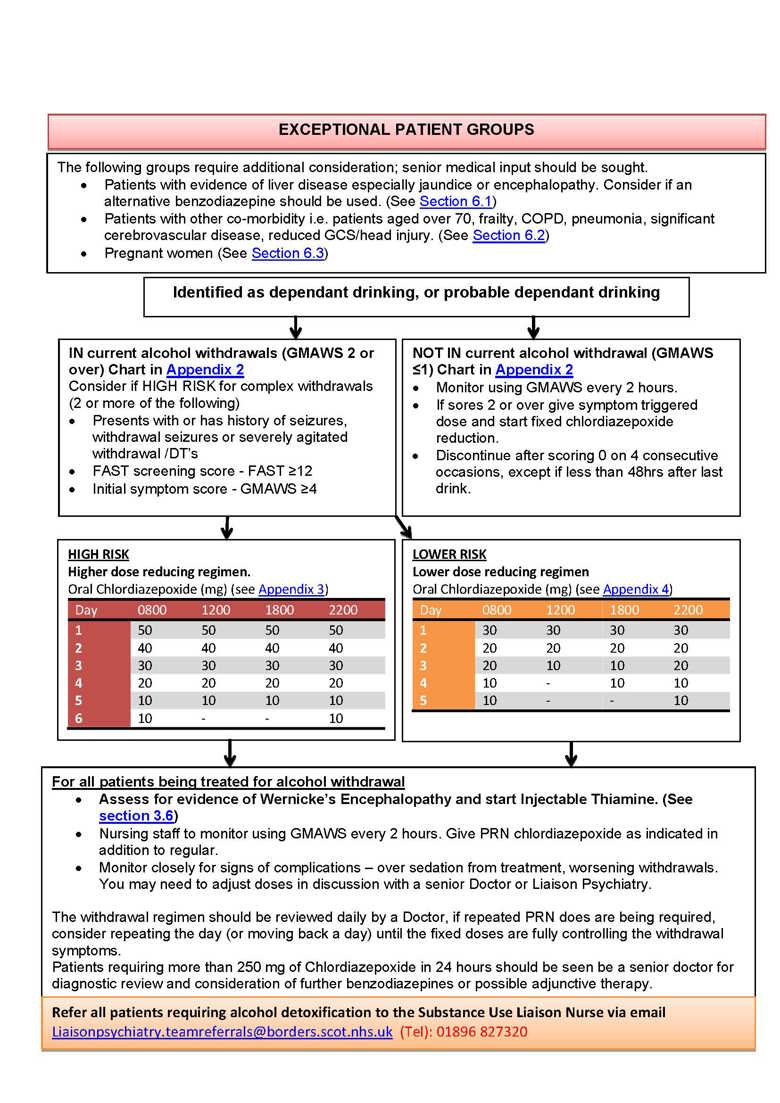
Any patient with two or more of the following are considered to be Higher Risk
- Presents with a history of seizures or has had previous withdrawal seizures or severely agitated withdrawal /DT’s
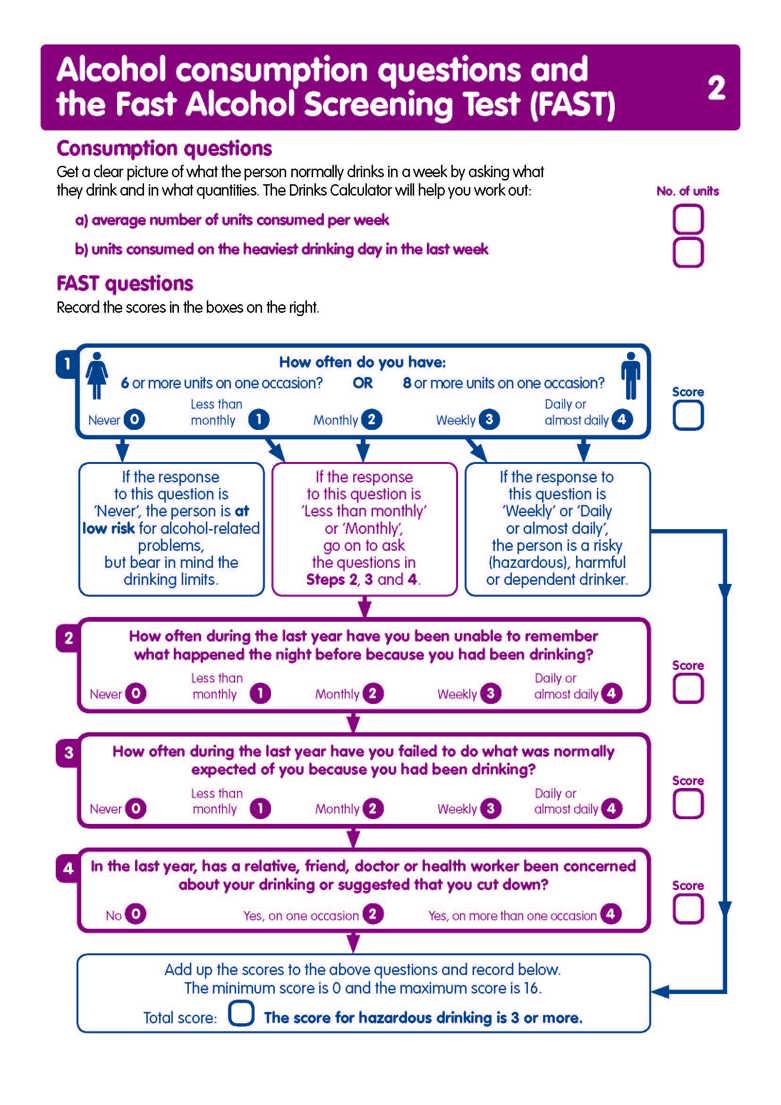
- High FAST screening score (FAST >12)
- High initial symptom score (GMAWS >4)
Patients assessed as higher risk should be started on a higher dose schedule. This should be reviewed at least daily by a senior doctor.
Higher dose reducing regimen
Oral Chlordiazepoxide (mg) (see Appendix 3)
| Day |
0800 |
1200 |
1800 |
2200 |
| 1 |
50 |
50 |
50 |
50 |
| 2 |
40 |
40 |
40 |
40 |
| 3 |
30 |
30 |
30 |
30 |
| 4 |
20 |
20 |
20 |
20 |
| 5 |
10 |
10 |
10 |
10 |
| 6 |
10 |
- |
- |
10 |
Lower Risk
Patients in withdrawal without risk factors, as above, should be started on the lower dose schedule.
Lower dose reducing regimen
Oral Chlordiazepoxide (mg) (see Appendix 4)
| Day |
0800 |
1200 |
1800 |
2200 |
| 1 |
30 |
30 |
30 |
30 |
| 2 |
20 |
20 |
20 |
20 |
| 3 |
20 |
10 |
10 |
20 |
| 4 |
10 |
- |
10 |
10 |
| 5 |
10 |
- |
- |
10 |
Symptom triggered monitoring / GMAWS
Alongside the fixed reducing regimen all patients should be monitored using the Glasgow Modified Alcohol Withdrawal Scale (GMAWS) for withdrawal symptoms between fixed doses. (see Appendix 2)
Use of the GMAWS is designed to support nursing staff in assessment of withdrawal symptoms and guide dosing of medication. Increasing GMAWS scores despite symptom triggered and fixed medication doses should trigger further medical review.
GMAWS scoring should be done at least every 2 hours and continue for at least 48 hours after the patients last reports having drunk. Beyond this time, it can be stopped after the patient has scored 0 on at least 4 consecutive occasions.
If after the fixed reduction after scoring has been stopped the patient reports uncontrolled withdrawal symptoms, assess these using GMAWS. If the patient is scoring 1 or >1 and requires additional symptom triggered treatment this should prompt medical review of their detox regimen.
Dehydration and Electrolyte depletion
Dehydration and Electrolyte depletion are both possible in those who are withdrawing from prolonged alcohol binges. All patients should be assessed clinically and have U&E’s, magnesium and phosphate checked on bloods. Please see IV fluid guidelines for further information.
- The degree of dehydration and electrolyte deficiency may be profound and require substantial replacement (particularly potassium, magnesium and phosphate).
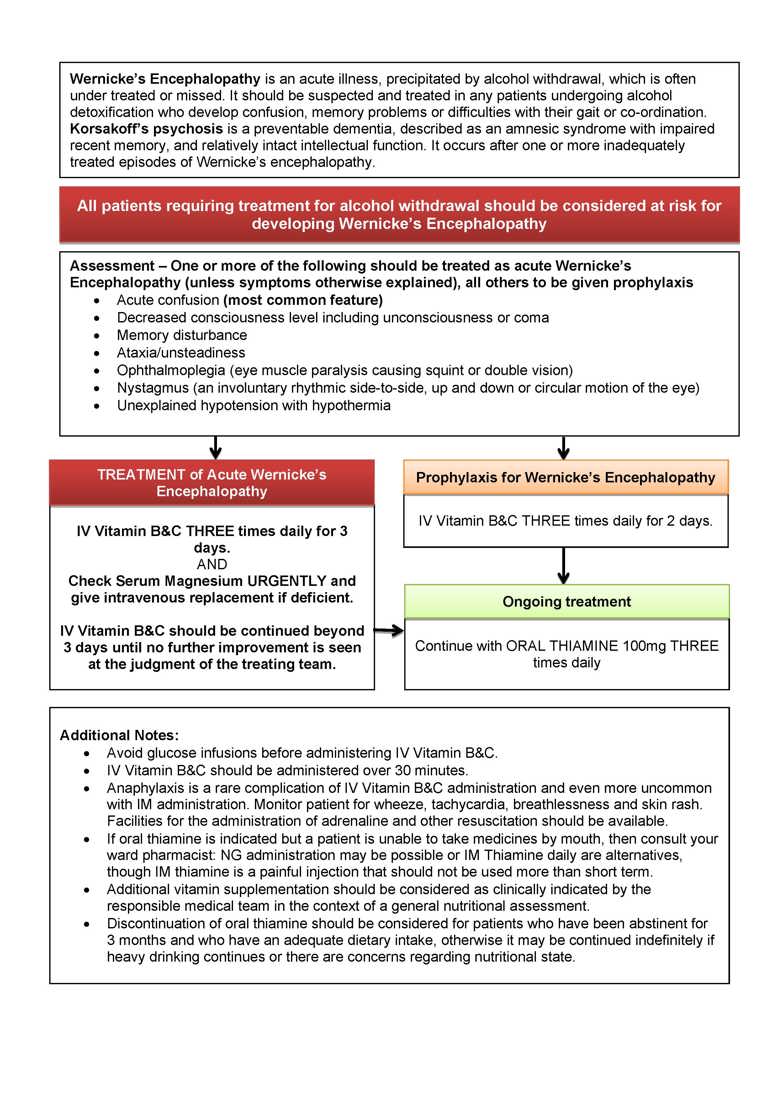
- Hypomagnesaemia is particularly significant and should be treated as it decreases seizure threshold, failure to replace magnesium may make treatment of hypokalaemia refractory and hypomagnesaemia reduces thiamine absorption.
- Dehydration and volume depletion increases autonomic activity and contributes to the physiological challenge posed by alcohol withdrawal symptoms.
- Sodium chloride 0.9% should be given initially to replace electrolytes and fluid.
- Crystalloid fluids containing potassium at standard maintenance rates may be necessary if the patient is sedated and not ingesting normal fluid intake.
- Fluids may need to be given at an accelerated rate initially depending on estimates of haemodynamic compromise, dehydration and serum electrolyte levels. Caution should be exercised where there is suspicion, or evidence of decompensation of liver or cardiac function.
- Glucose 5% should be reserved until after haemodynamic stability is achieved and IV vitamin B+C is given.
Reviewing treatment
Patients having treatment for alcohol withdrawal should be reviewed daily. Where there is no evidence of over sedation or significant withdrawal the fixed reduction can generally continue.
If the patient is continuing to experience withdrawal symptoms (scoring on GMAWS) and requiring multiple additional doses of medication over the fixed reduction then consideration should be given to repeating a day of the fixed reduction regimen, this should be at a lower threshold where the patient has been assessed as being at higher risk. Where a patient is scoring 4 or over on GMAWS the fixed regimen should not be reduced, and the day repeated until GMAWS is no longer 4 or over.
Patients fulfilling the following criteria should be reviewed by a Senior Doctor.
- Alcohol blood level >100 mg/ml
- Patients requiring higher dosing Chlordiazepoxide pathway
- Complications (Seizures, DTs)
- Pregnancy
- Requiring greater than BNF doses of Chlordiazepoxide
- Patients wishing to discharge prior to completing full detoxification pathway.


 NHS Borders clinical guidelines