Background

This document outlines a national pathway for carotid endarterectomy. Carotid Endarterectomy (CEA) is performed to remove atherosclerotic disease within the carotid arteries which transport blood to the brain. It is usually performed following a stroke with good recovery or Transient Ischaemic Attack (TIA). The aim of the procedure is to prevent a subsequent major stroke.

Carotid Endarterectomy should be performed urgently following a stroke with good recovery or TIA.

The National Institute for Clinical Excellence (NICE) has set the following targets1:

  • Referral within 7 days of diagnosis
  • Treatment within 14 days of the event/diagnosis.

However, there is wide variation nationally with the reasons often multifactorial. The Get It Right First Time (GIRFT) national specialty report recommends that surgery takes place within 7 days of the diagnosis event2. Carotid Endarterectomy can also be performed in asymptomatic patients but this is becoming less common in the UK.

Pathway recommendations

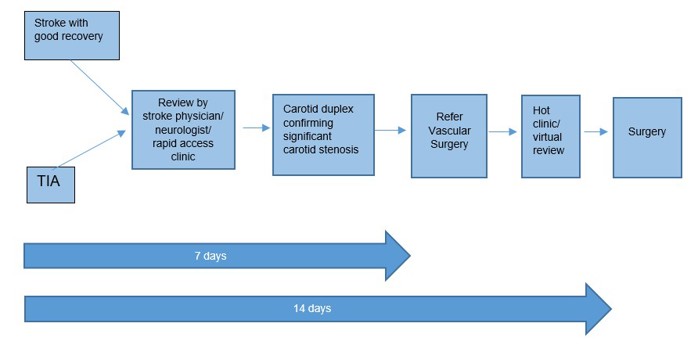
Flow chart outlining pathway recommendations for carotid endarterectomy

Referral and triage

Following initial referral/ presentation, patients will be reviewed by specialist physicians (stroke physicians, neurologists or general physicians). Patients will have optimisation of medical conditions including metabolic syndrome, hypertension, diabetes and hypercholesterolaemia along with being commenced on secondary preventative medication. The patients will undergo imaging to confirm evidence of carotid disease; carotid duplex, computed tomography (CT) angiography or magnetic resonance (MR) angiography. Carotid disease should be confirmed on either 2 imaging modalities (types) or 2 carotid duplex ultrasound scans performed by separate vascular technicians.

Patients who are potentially suitable for surgery should be referred urgently to the vascular service if the imaging reveals the following:

  • 50% to 99% stenosis according to the North American Symptomatic Carotid Endarterectomy Trial (NASCET) criteria, or
  • 70% to 99% according to the European Carotid Surgery Trial (ESCT) criteria.

The methods of referral may vary between individual vascular services (electronic mailbox/ on call team) but the priority is for urgent review and intervention.

On receipt of the referral, patients should be considered immediately for Carotid Endarterectomy if appropriate. Adverse factors include poor recovery following index cerebrovascular event, significant co-morbidity, poor level of function or patient preference.

Patients can be reviewed via urgent outpatient clinics, hot clinics, or telephone consultation as long as surgery, if appropriate, is not delayed. Consideration should be given to a Multidisciplinary Team Meeting (MDT) although this should not delay intervention. 

The benefits and risks of carotid surgery vary depending on a number of factors, including degree of stenosis and gender of the patient. The decision to proceed with surgery should involve shared decision making with a fully informed patient. The use of a validated stroke risk calculator tool may help in this regard e.g. Oxford Carotid Stenosis Tool3


Intervention

Fully informed consent should be obtained from patients suitable for surgical intervention. Potential risks and complications include stroke, myocardial infarction, death, nerve damage, infection and bleeding. Surgical intervention should be performed within 14 days of the index event. Earlier intervention should be considered in the presence of crescendo TIAs.

Carotid Endarterectomy should be performed by trained vascular surgeons in high volume regional centres and data should be submitted to the National Vascular Registry. Consultant anaesthetists with a specialist interest in vascular surgery should be assigned to these cases.

Post operatively, patients should have a prolonged period of cardiovascular monitoring in the recovery area followed by transfer to the Vascular Ward or managed in a High Dependency / level 1 environment for 24 hours before discharge. Local protocols for blood pressure management will vary between units.

Most patients will be discharged on the first post-operative day if neurologically and haemodynamically with no signs of complications.

Post-operative antiplatelet regimes vary between units but patients should be on appropriate secondary prevention unless contraindicated. Requirements for ongoing stroke rehabilitation should be confirmed with the referring department at discharge.

Monitoring and Clinical Practice

Data should be submitted to the National Vascular Registry and local governance measures should be in place for adverse events.

References

National Institute for Health and Care Excellence (NICE). Stroke and transient ischaemic attack in over 16s: diagnosis and initial management. NICE guideline [NG128]. London: NICE; 2019 May 1 [last updated April 2022]. Available from: https://www.nice.org.uk/guidance/ng128/chapter/Recommendations External link icon